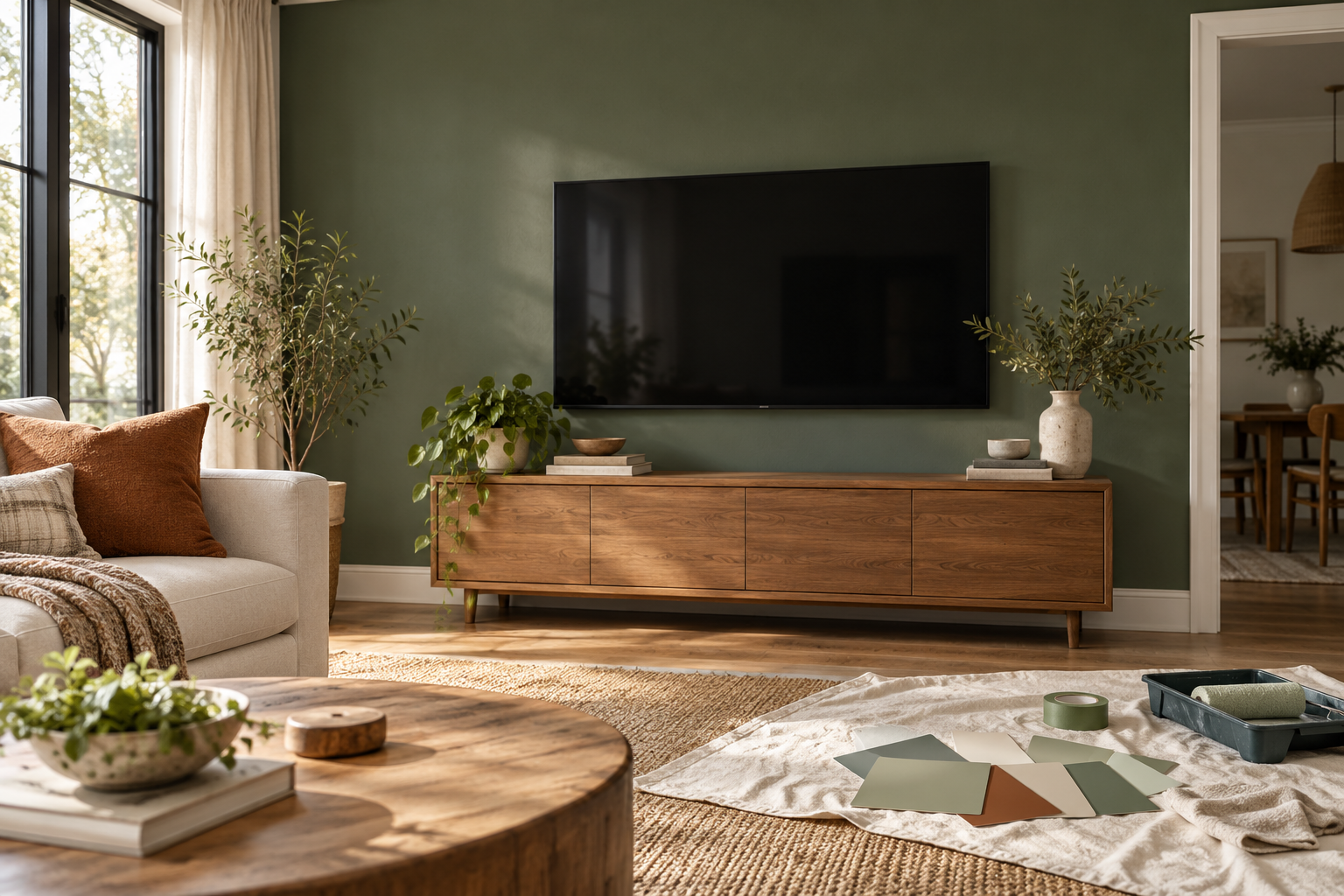
Decide what the wall needs to do next
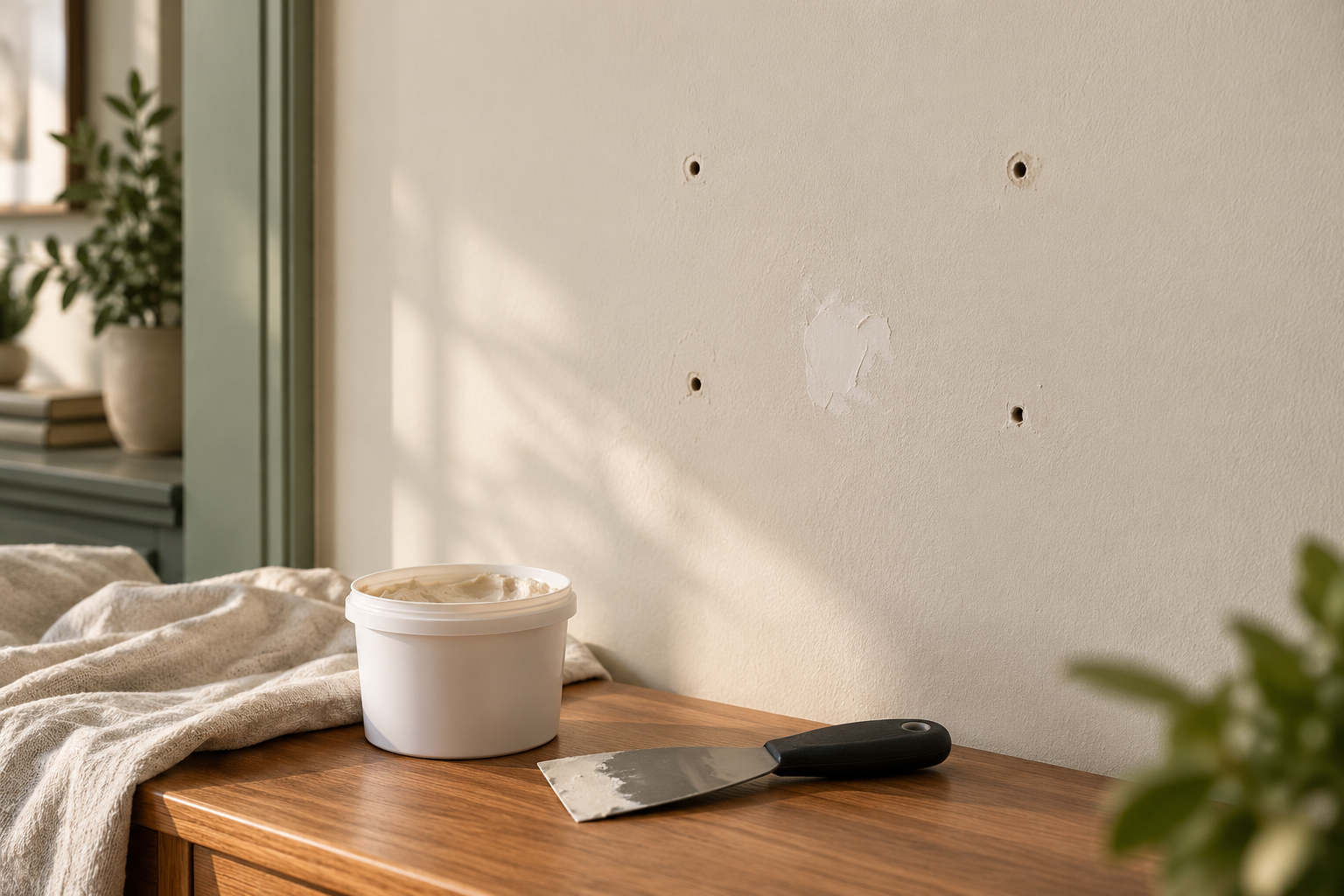
Four little holes can be the easy part of moving a television. Ask whether this wall will become a clean decorative surface, receive a different mount, or keep the same equipment. Each outcome needs a different conversation before the damage disappears under filler.
Photograph the exposed wall and keep the TV and mount model information. Note which marks were fixing holes, which were cable openings and which existed before removal. These notes help the next person assessing the job; they do not prove where a stud or hidden service is located.
Classify the damage before choosing a product
DAP describes spackling as preparation for holes, dents and cracks in drywall or plaster, with different formulations for small or deeper repairs. USG describes its patch-and-repair compound as a product for holes, cracks and minor interior surface damage. Those descriptions concern repairing the finish, not certifying a future TV attachment.
A small clean hole, a pulled-through anchor and a cable opening should not automatically receive the same treatment. Note torn paper and surrounding damage. Damp, soft or separating material and repeated cracking need their underlying condition assessed before a cosmetic patch.
| What you observe | What to establish | What it does not establish |
|---|---|---|
| Small hole; otherwise intact surface | Material and repair product suitable for its size and depth. | That the opening suits another mount fastener. |
| Torn paper, enlarged opening or broken board | Whether a patch system or replacement section is needed. | That more filler restores fastener capacity. |
| Moisture, soft material or recurring movement | Cause and repair scope before decorating. | That covering the mark resolves the problem. |
| Planned TV remount nearby | Exact mount, TV load, wall and attachment requirements. | That an old hole identifies an approved fixing location. |
Use the repair system for the actual opening
USG publishes different methods for different damage, including repair-panel patches and texture matching. DAP distinguishes small filling repairs from openings needing a patch. Selecting a tub by its drying-time headline is a poor substitute for checking the intended application.
Follow the chosen manufacturer’s preparation, application, drying and finishing instructions. Ask how the surrounding texture will be blended. A product described as high strength still needs its own limits checked; the wording alone does not make it a rated mounting substrate.
Plan the appearance before the touch-up
A filled hole and a visually consistent wall are separate finish goals. DAP recommends priming repaired areas for even coverage. Sherwin-Williams identifies drywall primers and stain-blocking primers as serving different needs. Choose the system for the actual condition rather than assuming leftover paint will complete the repair.
Agree whether the scope includes a local touch-up or the whole visible wall. Review the result under normal daylight and evening lamps. Keep product, color and sheen details. Do not promise an invisible repair before the condition, texture and existing coating have been assessed.
Give remounting its own approval
The current SANUS BXL1 manual, for example, specifies acceptable wall constructions and prohibits installing that model into drywall alone. Other purpose-built mounts have different permitted systems; this is not a rule for every bracket. Follow the actual mount and television instructions, including required hardware and wall limitations.
If old attachment points will be reused, the installer needs to assess their condition and whether reuse is permitted. Replacing a screw, filling a hole or hiding a patch behind the bracket does not settle that question. This guide provides no drilling pattern, substitute fastener specification or approval for a particular wall.
Use this handover checklist
Keep a short record separating the decorative repair from the mounting decision. A finished wall should not be the only evidence available on installation day.
- Before repair: photograph the area and record known wall material, old mount model and observed damage.
- Repair scope: record the method, product instructions, texture work and agreed painting area.
- Remount scope: identify who assesses the wall and approves attachment against the actual equipment manuals.
- Older coatings: before disturbing paint in a pre-1978 US home, address possible lead. EPA recommends a lead-safe certified contractor for this work.
A couple of useful answers.
Can a TV mount screw go into a filled drywall hole?
Do not assume a cosmetic fill provides a suitable attachment. Assess the wall, damaged area, mount and permitted fixing method separately. Follow equipment instructions rather than the appearance of the patch.
Does a larger hole mean replacing the whole wall?
Not necessarily. Manufacturers offer different patch and repair-panel systems. The method depends on material, damage and wall requirements; finishing the hole does not independently approve it for remounting.
Sources & further reading
Source material checked October 18, 2026. Manufacturer specifications and retailer terms can change.
DAP: spackling types, repair applications and paint preparation ↗USG: Sheetrock Dust Control compound intended repair applications ↗USG: repair methods for damaged drywall and textured finishes ↗Sherwin-Williams: primer selection and differing surface needs ↗SANUS: BXL1 installation manual and wall safety limitations ↗US EPA: lead-safe renovation guidance for homeowners ↗Research-based guidance. How we publish and review our work