Start with the whole room, not a perfect paint chip
The television wall is also the wall you see with the television off. Start with the sofa, floor, curtains and adjacent rooms you intend to keep. Decide whether you want the screen to blend into a quiet background or sit within a brighter composition. That is a design preference, not a technical picture-quality setting.
Write a short brief before collecting colors: comfortable for daytime conversation and evening films, for example. It gives you a useful test for a fashionable shade that looks attractive online but does little for your actual room.
Look at samples from the sofa, morning and evening
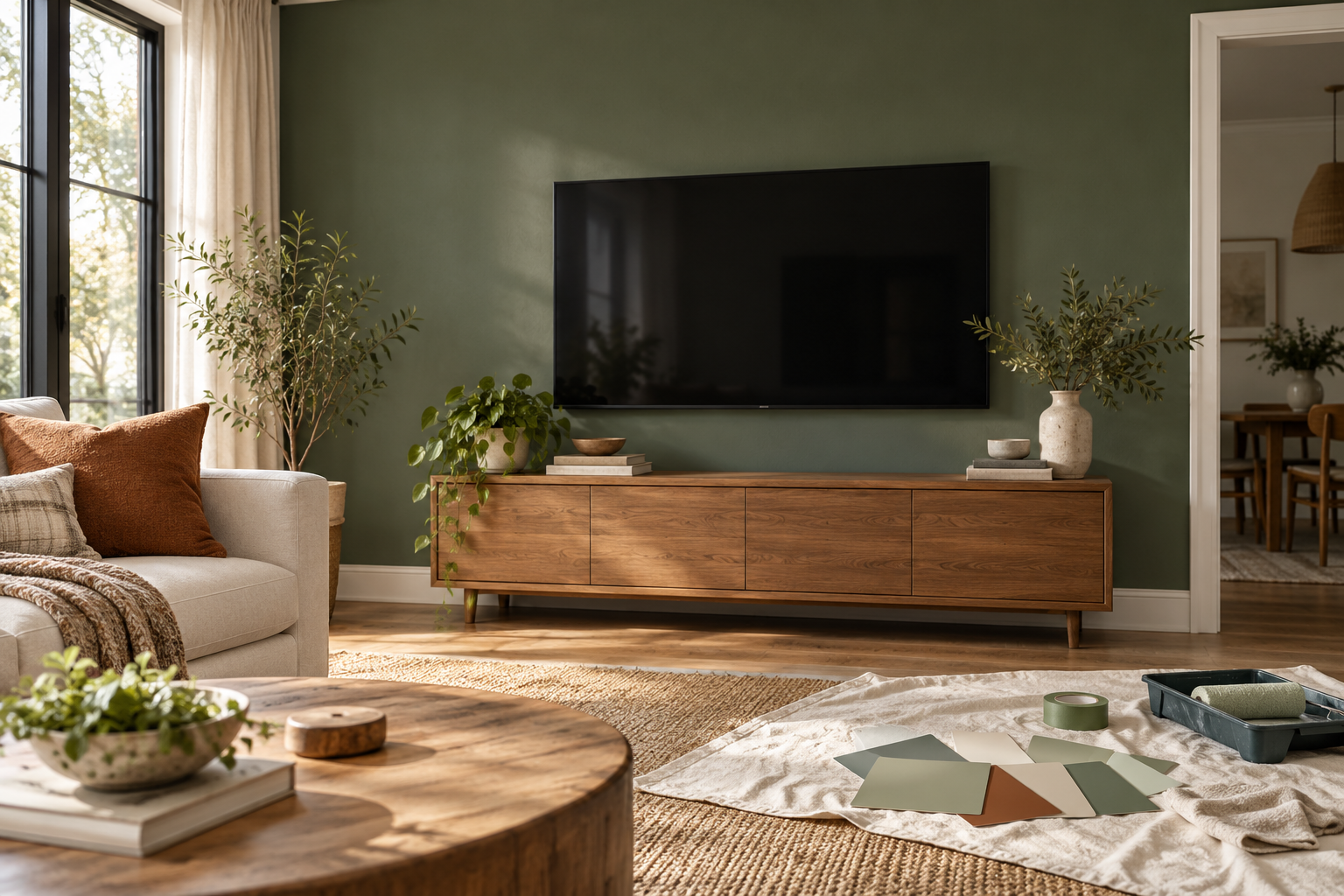
Benjamin Moore recommends checking paint samples in the actual space under different natural and artificial lighting. Its color-selection guide suggests painting poster board so a sample can move around the room. An online swatch is useful for a shortlist; it cannot reproduce your wall, lighting or display settings.
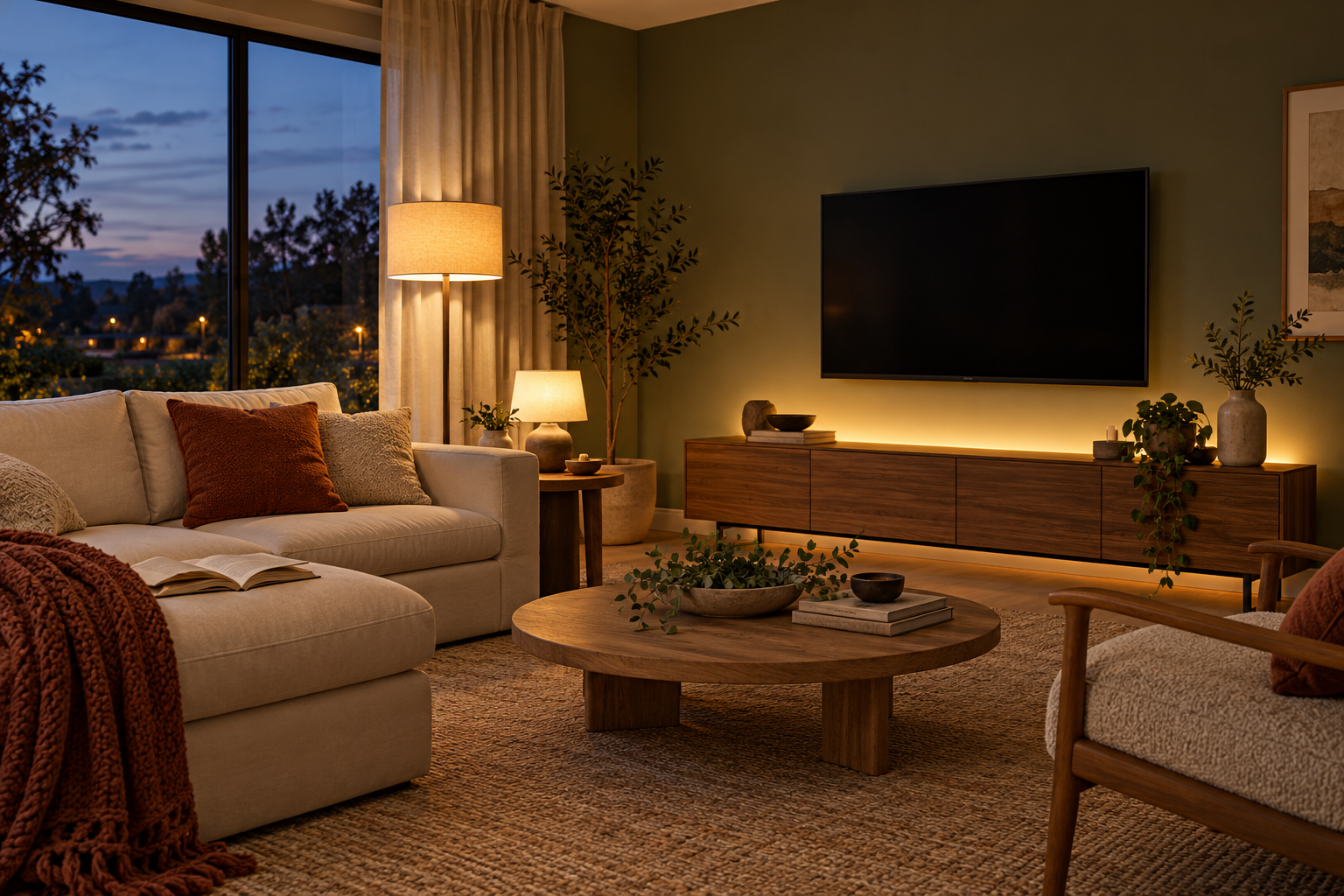
Compare a few candidates beside the trim, upholstery and console. Look during the hours you use the room, with normal lamps on and curtains in their usual positions. Include the view with the TV off. Keep notes rather than relying on memory. Keep the comparison focused on the room and finish you want.
Choose sheen for the surface and the way you live
Benjamin Moore describes matte as low sheen, eggshell as suitable for living rooms and higher-traffic walls, and satin as glossier. Lower sheen can be more forgiving of surface imperfections. Cleaning performance also depends on the formulation: do not assume every matte or eggshell behaves identically.
Compare actual products, not just sheen names. A color sample may not reproduce the final product’s sheen; ask the retailer how to evaluate both.
| Your priority | What to compare | What to check |
|---|---|---|
| A quiet-looking wall with visible repairs | Matte or another low-sheen product | Preparation and manufacturer cleaning guidance. |
| A heavily used living room | Eggshell and washable matte options | Exact-product durability and care instructions. |
| A deliberate lustrous effect | Satin or a higher sheen | Whether existing wall irregularities become more noticeable. |
Treat preparation as part of the finish
Sherwin-Williams describes a paint-ready surface as clean, sound and dry. Identify the existing coating and wall material before choosing preparation. Grease, loose material, damaged paper, old filler and persistent staining are different conditions; one tin of paint is not a universal remedy.
For new drywall, its guidance calls for finished joints, fully dry patching material, dust removal and priming. Its primer guide distinguishes products for new drywall, adhesion and stain blocking. Ask which system fits your surface, and follow its label. A stain that keeps returning needs its cause assessed before another decorative coat.
Make a one-page TV-wall brief
This editorial worksheet helps a painter and installer understand the same finished result. Complete it before requesting a quote or scheduling equipment removal.
- Room use: record seating positions, daylight hours and evening lamp settings used for sample comparisons.
- Finish: record manufacturer, product, color code, sheen and sample observations; photograph labels for future touch-ups.
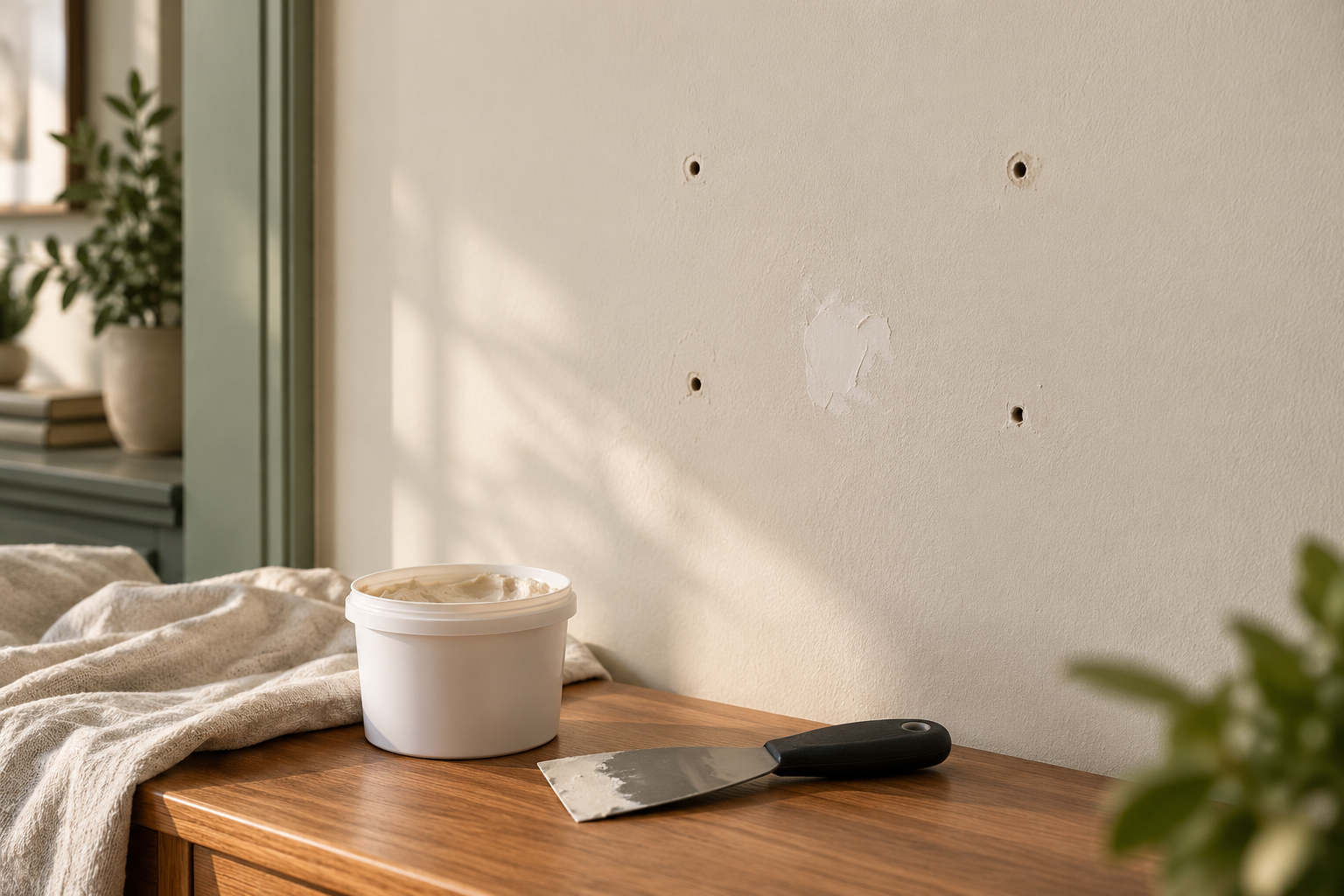
- Condition: mark old mount holes, patches, peeling, staining and unknown materials on a simple sketch.
- Visible area: decide whether the whole wall, adjacent returns and trim are included, including areas exposed if the TV moves.
- Equipment: name who removes and protects the TV, assesses future attachment points and completes the final equipment checks.
Sequence the work and allow the surface to be ready
Agree on assessment, equipment handling, repairs, preparation, painting and remounting as separate parts of the job. Follow the actual filler, primer and paint instructions for drying, recoating and curing; do not promise a universal same-day turnaround. A neat coating is a visual result, not approval of the wall’s fasteners.
Before disturbing old coatings in a pre-1978 US home, address possible lead paint. EPA recommends a lead-safe certified contractor for renovation, repair and painting projects in these homes. Ordinary sanding instructions are not a substitute for that guidance.
A couple of useful answers.
Is dark paint always best behind a TV?
No single color suits every room. Compare samples with your furnishings and normal lighting. Wall color is a decorating choice, not a substitute for addressing reflections or adjusting the television.
Can I paint over former mount holes?
First assess and repair the damaged surface appropriately, then follow the repair and coating instructions. Evaluate any future TV attachment separately from the cosmetic finish.
Sources & further reading
Source material checked October 18, 2026. Manufacturer specifications and retailer terms can change.
Benjamin Moore: choosing interior paint colors and sampling in actual lighting ↗Benjamin Moore: paint finish and sheen guidance ↗Sherwin-Williams: interior surface preparation ↗Sherwin-Williams: choosing a primer for the surface ↗US EPA: lead-safe renovation guidance for homeowners ↗Research-based guidance. How we publish and review our work