1. Draw the room people actually use
Before choosing a TV-wall color, list three things the living room must do: perhaps watch films, welcome visitors, and provide a reading seat. Add anything that gets overlooked in photographs, such as a pet bed, toy storage, or a route to the patio. Those needs belong on the plan alongside the sofa.
Crate & Barrel's furniture-planning guide recommends drawing the room to scale and measuring the pieces that will occupy it. Mark doors, windows, vents, outlets, and the direction doors swing. Sketch the routes people take between entrances. Then move paper furniture shapes before moving heavy furniture. Walk the proposed routes in person, including with the items or mobility aids your household uses; a line on paper cannot prove the space works.
2. Decide when the television should lead
A room used mainly for watching can give the main seats a direct view. In a conversation-first room, consider a sofa facing two movable chairs, with the screen visible from the seats used for television. Rehearse both activities. An arrangement that photographs well but requires a twisted neck every evening needs another pass.
When a fireplace and television compete, test separate walls before combining them. Combining two focal points can force an uncomfortable viewing height. Samsung's placement guidance asks viewers to consider their normal seated eye position and cautions about fireplace heat. Decoration should respond to the safe, comfortable location rather than dictate it.
3. Test the scale before buying the supporting pieces
Mark the exact screen and console outlines with removable paper or a wall-safe marking method. Look from the entrance and every regular seat. Does the console appear cramped beneath the screen? Do neighboring objects crowd its edges? A wider visual base can feel calmer, but that is a styling choice; the furniture must first meet the television's actual support, load, and clearance requirements.
Carry the same rehearsal to a rug or coffee table. Mark their proposed footprints and check door swings, reclining seats, and the walking route. Choose fewer pieces if each addition removes useful space. A room does not need a table in every gap.
4. Give the television a connection to the rest of the room
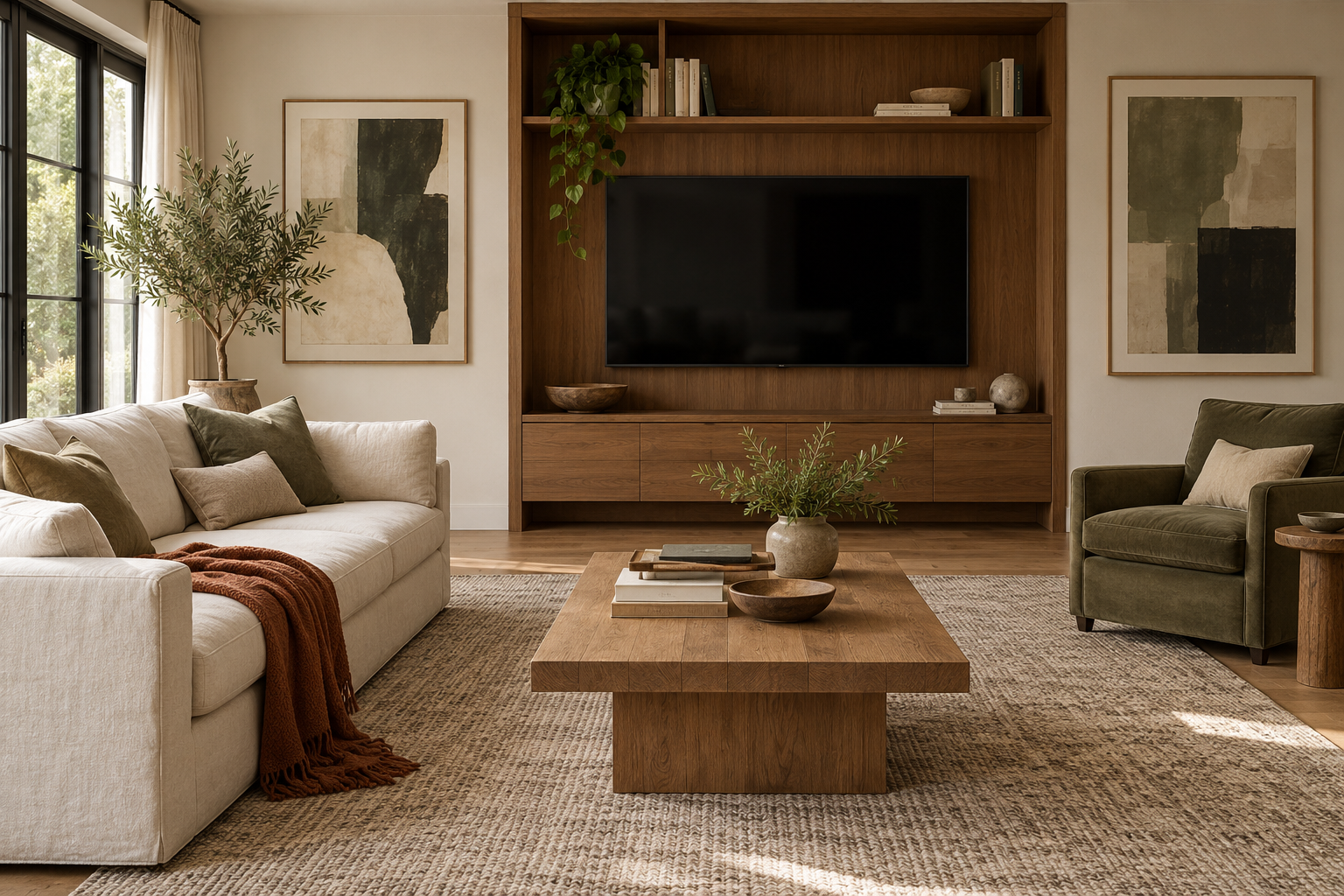
Try a small material palette using things already present. A dark screen frame might relate to a lamp base and picture frame; a wood console might relate to a chair or side table. There is no need to match every finish. Keep the pieces you like and look for one or two useful connections.
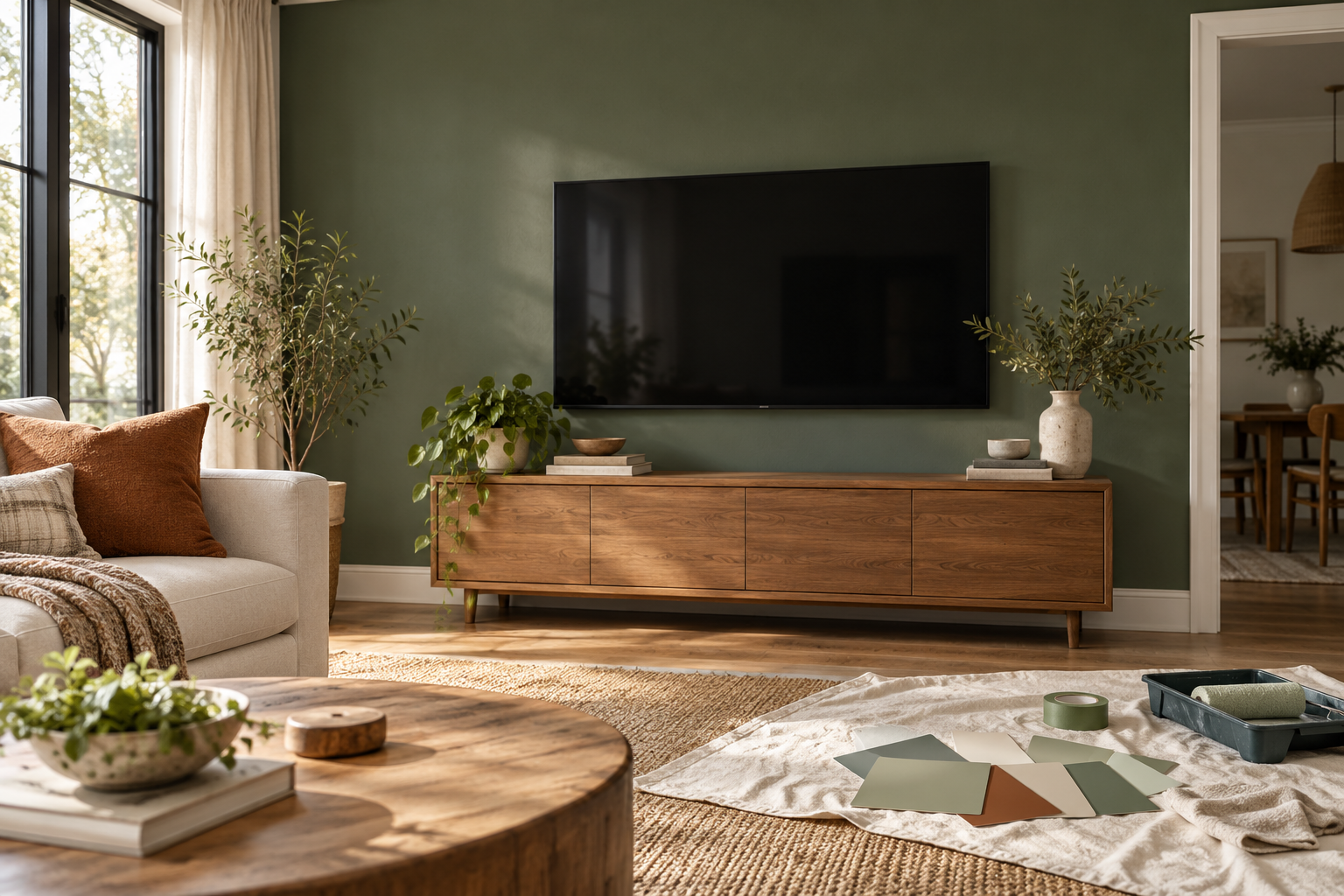
IKEA's TV-unit styling guidance recommends leaving some surfaces open and keeping accessories from obscuring the television. Try removing half the small objects before adding more. Place a few books or a bowl away from the picture, controls, and soundbar. Test paint samples in the room's own daylight and evening lighting before committing to a whole wall.
5. Make lighting useful in more than one mode
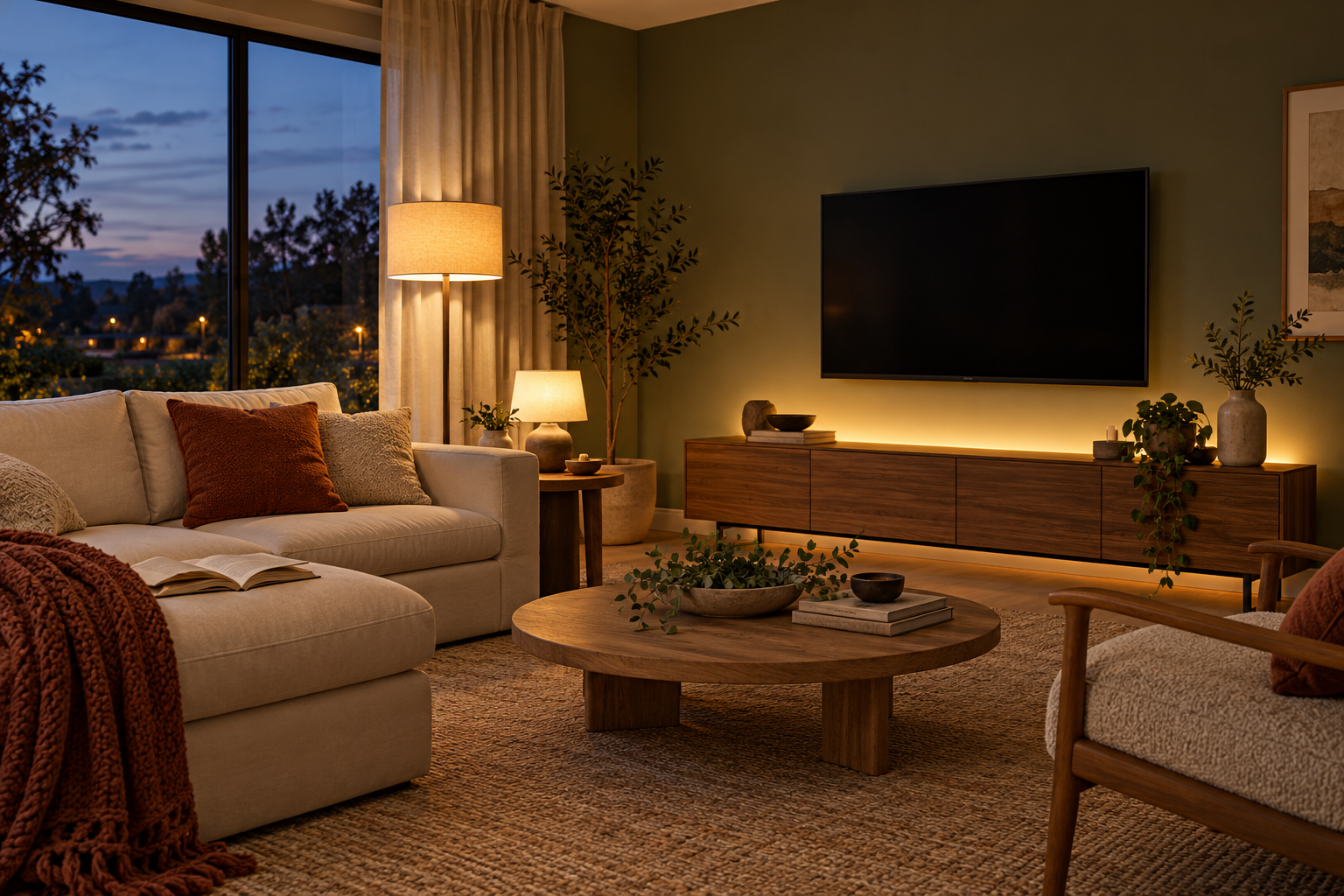
Philips Hue describes three lighting jobs: general illumination, focused task lighting, and accents. Apply that framework without assuming you need a connected lighting system. A reading chair may need a focused lamp, while visitors need enough general light to see one another and move comfortably.
Test the room with the television off, on, and showing a dark scene. From each seat, look for exposed bulbs and bright reflections; try moving an existing lamp or adjusting a shade first. Keep a practical route to switches and controls. If you later add smart lamps, retain a simple way for guests to operate them. Changing several fixtures at once makes it harder to identify which change helped.
6. Plan what the camera does not show
List every device, its power source, and the connections it needs. Include the soundbar, receiver, game console, router, and any separate TV connection box. Decide how you will reach plugs and replace a cable after decorating. Check each device's ventilation instructions before closing it inside furniture or building a surround.
For a visible cable route, compare suitable surface cable-management products and their installation instructions. An in-wall route needs a separate assessment of the wall, cable ratings, and power arrangement. Ask a qualified installer or electrician to establish the applicable method before covering anything. A cable hidden from view is not automatically a properly installed cable.
7. Use the room-edit worksheet
Fill in the last column for your own room. These are decisions to test, not a shopping list. Keep photographs and measurements together so the next purchase solves an identified problem.
| What feels wrong? | Try first | Record before spending |
|---|---|---|
| People cross the picture | Move a seat or test another screen wall | Main route and viewing positions |
| TV wall feels crowded | Remove small accessories | What needs storage or access |
| Screen feels disconnected | Repeat an existing finish elsewhere | Colors and materials worth keeping |
| Evening reflections distract | Move or shade an existing lamp | Problem seat, light, and time |
| Furniture feels oversized | Rehearse a smaller footprint | Door, recliner, and walking clearances |
| Cables remain visible | Map each connection and service route | Assessed method and written estimate |
8. Spend in the order the room needs
Begin with a no-purchase edit: rearrange movable pieces, relocate accessories, and test existing lighting. Next, identify one missing function, such as reachable reading light or usable closed storage. Price that specific solution locally, including delivery, assembly, and any required installation. There is no universal budget for this room. Live with each reversible change before committing to paint, new furniture, or built-ins.
A couple of useful answers.
Does the television have to be the focal point of a living room?
No. Choose the main arrangement around the activities that matter most, then test whether the regular television seats still have a comfortable view. A conversation-first layout can work when seats can move or serve more than one purpose.
How can I improve a TV wall without buying new furniture?
Remove excess accessories, move a lamp that reflects in the screen, repeat an existing color or finish, and test a different seating arrangement. Check equipment access and ventilation before concealing devices.
Sources & further reading
Source material checked October 18, 2026. Manufacturer specifications and retailer terms can change.
Crate & Barrel: measured furniture layouts and focal-point planning ↗IKEA Türkiye: TV-unit styling, negative space, and unobstructed viewing ↗Philips Hue: ambient, task, and accent lighting in a living room ↗Samsung: TV placement, seated viewing height, fireplace heat, and model-specific mounting information ↗Research-based guidance. How we publish and review our work