Measure the way you actually watch
Sit where you watch television most often, with the cushions and posture you normally use. Have someone measure your eye height from the floor. This gives you a useful reference for testing the center of the picture. It is a starting point, not a rule requiring every screen to land at exactly that height.
A low lounge chair, an upright sofa, a bed, and a kitchen counter create different viewing positions. If several seats are used regularly, test more than one. A beautiful installation can still be frustrating if the main viewers are constantly lifting their chins.
Use a full-size outline
Mark both the picture area and the space below it. A soundbar needs its own position, and an equipment cabinet may impose a practical minimum height. Try the outline for a normal-length viewing session before any holes are made. If you want an adjustable mount, think about the screen both against the wall and pulled forward.
- Mark the screen center and the full top and bottom edges.
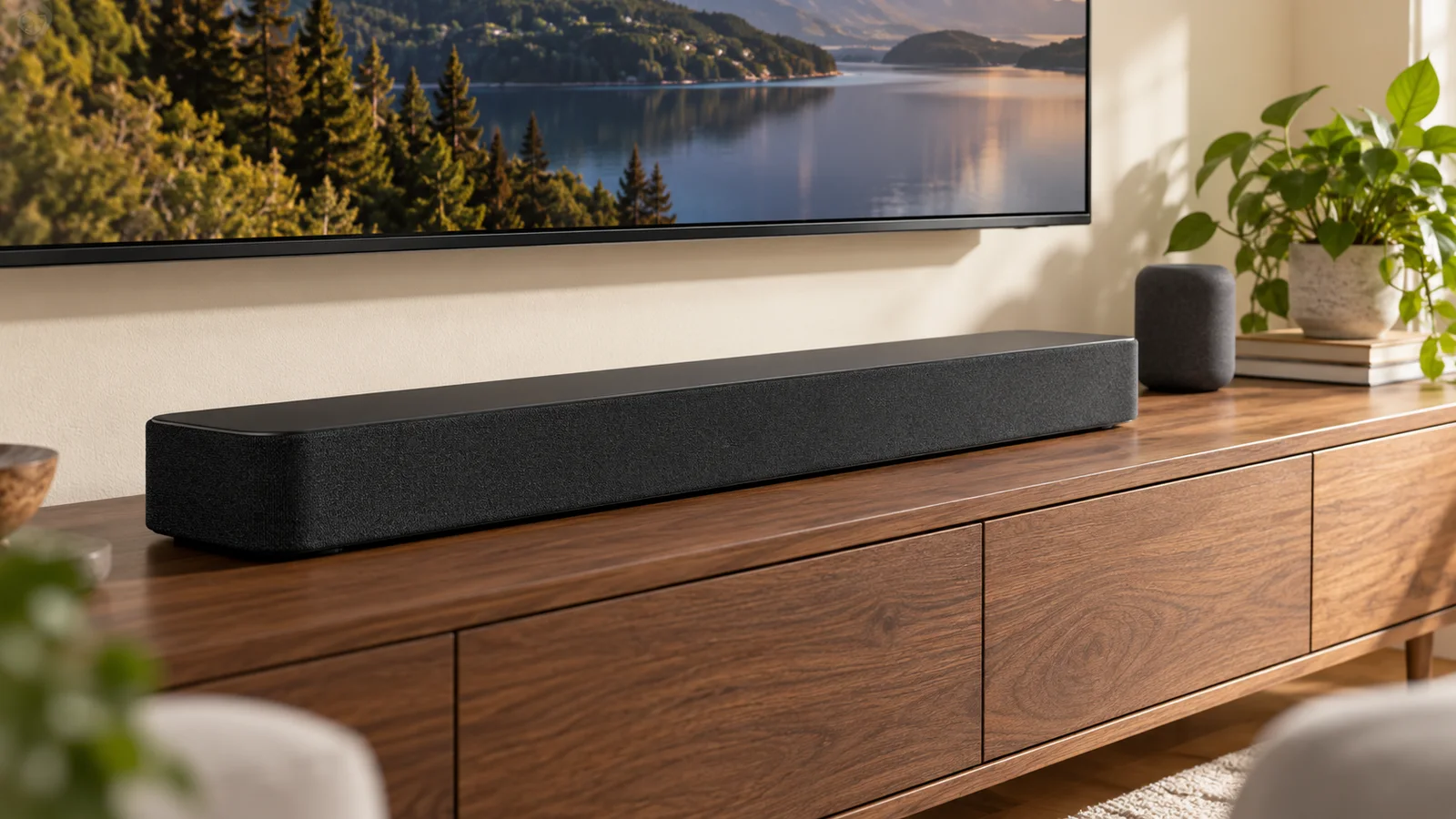
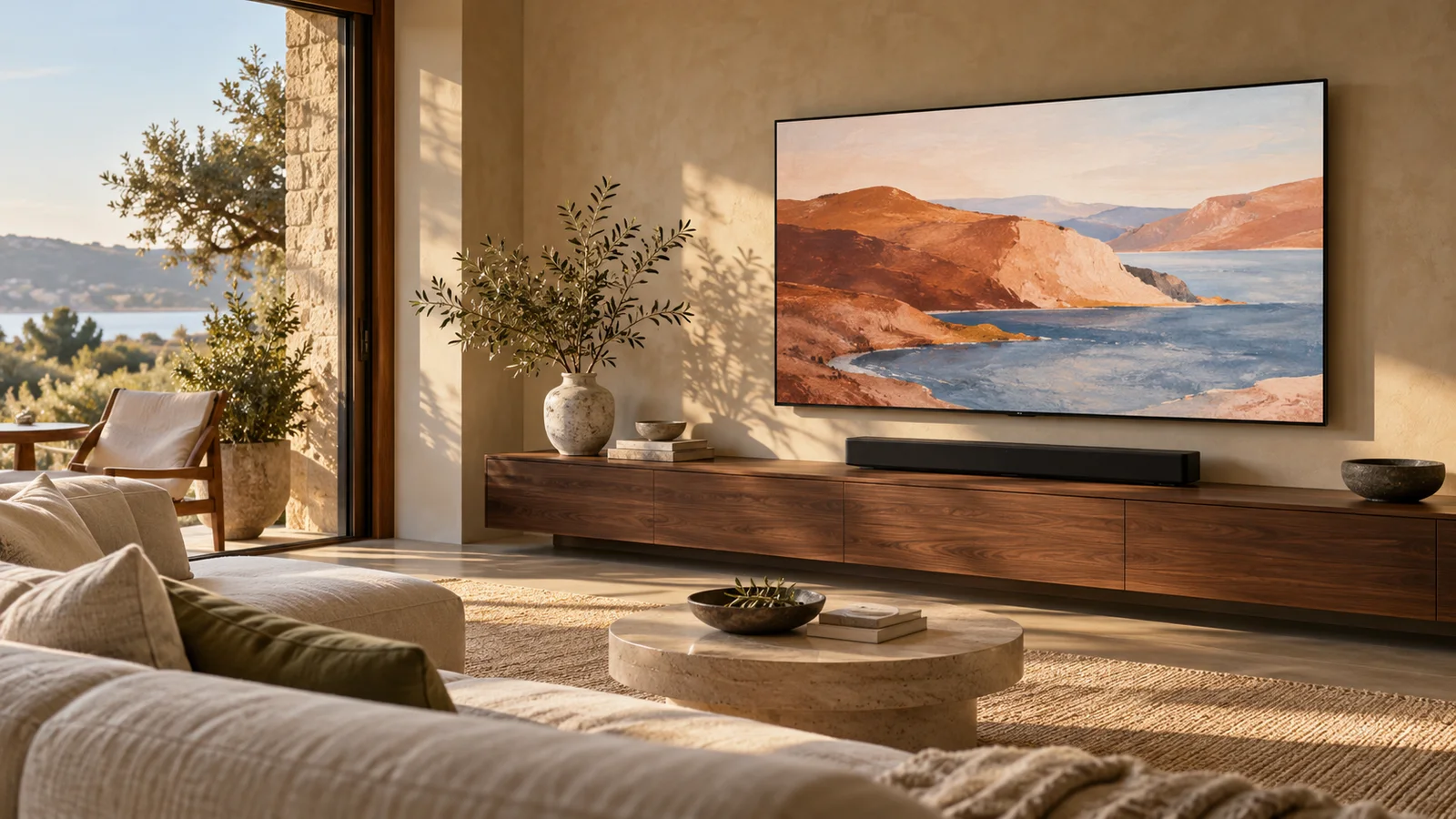
- Check that the soundbar will not obscure the picture or remote sensor.
- Leave room for ventilation and future cable access.
- Confirm the finished location with everyone who uses the room.
Treat a fireplace wall as a separate planning problem
A fireplace changes both the viewing angle and the installation conditions. Heat exposure, mantel depth, wall construction, hidden services, and the TV manufacturer’s limits all need attention. A mounting bracket does not make excessive heat acceptable. Ask the installer to assess the particular wall and equipment before deciding on the location.
Turn the plan into a clear installation brief
Before the appointment, write down the model number, wall material, desired picture center, cabinet height, and the location of power and source equipment. Photos from the sofa and from the side of the wall can help explain what you want. The installer can then confirm what is feasible and what needs an adjustment.
Our sizing tool can calculate a picture’s approximate bottom edge from a chosen center height. It cannot inspect the wall, confirm fixing suitability, or substitute for the model’s installation instructions.
A couple of useful answers.
Should every TV center be 42 inches from the floor?
No. Use your actual seating and eye height as a reference, then account for screen size, furniture, accessibility, and comfort.
Can a tilt mount solve every high-TV problem?
No. Tilt can change the screen angle, but the screen remains physically high. Test the viewing position before selecting the wall location.
Sources & further reading
Source material checked October 16, 2026. Manufacturer specifications and retailer terms can change.
Samsung: wall-mount planning and manufacturer guidance ↗Research-based guidance. How we publish and review our work