This week’s question: what would actually improve your room?
The most interesting gadget is not necessarily the one your home needs next. A shared control screen, a soundbar, television lighting and a voice speaker solve different problems. Start by naming the irritation: reaching for a phone to change a scene, struggling with TV dialogue, wanting more atmosphere, or finding everyday voice controls cumbersome.
This October 18 shortlist draws on current manufacturer announcements, product pages and setup requirements. The verdicts are editorial judgments from that research, rather than laboratory results or accounts of hands-on use. Release status matters: one device below is still a preorder. No item earns a recommendation merely by being new.
Apple HomeView: a shared dashboard worth planning, rather than rushing
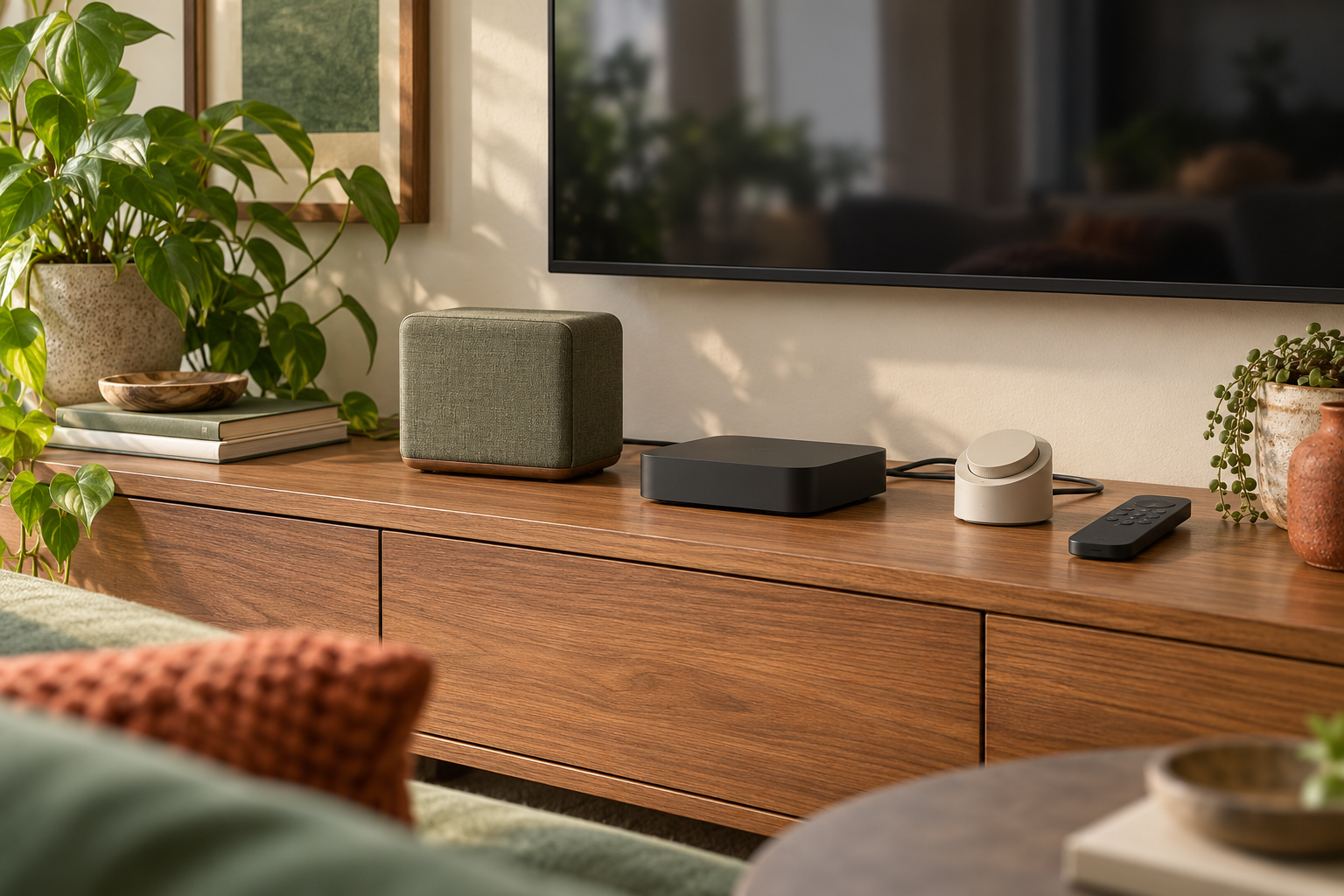
Apple introduced HomeView on October 13, 2026, with US availability scheduled for November 13. It has a 7-inch display and comes in tabletop and separate wall-mounted versions. Its appeal is a visible household control point for compatible Apple Home and Matter accessories, alongside communication and entertainment features.
The important qualification is the household around it. Apple says setup and multiuser support require a compatible iPhone or iPad with current software. Personal-context features require a paired Apple Intelligence-enabled device. Personal content is designed to appear after face recognition, with the paired device present and recently unlocked. That is a specific operating arrangement, not a promise that everyone receives the same experience.
Read the launch footnotes before budgeting: Siri AI is described as beta in software version 27.2; some server-based features have daily limits, with expanded paid access planned. Supported camera intelligence requires iCloud+, and content subscriptions may be separate. Wall mounts also add cost.
Editorial verdict: promising for an Apple household that wants a permanent shared dashboard. Wait for shipping-software reviews if dependable daily operation is your priority. Plan the power route and mounting position before committing to a wall model; a newly announced interface is not a reason to make an unnecessary hole.
Sonos Beam Ultra: investigate the connection before the surround-sound promise
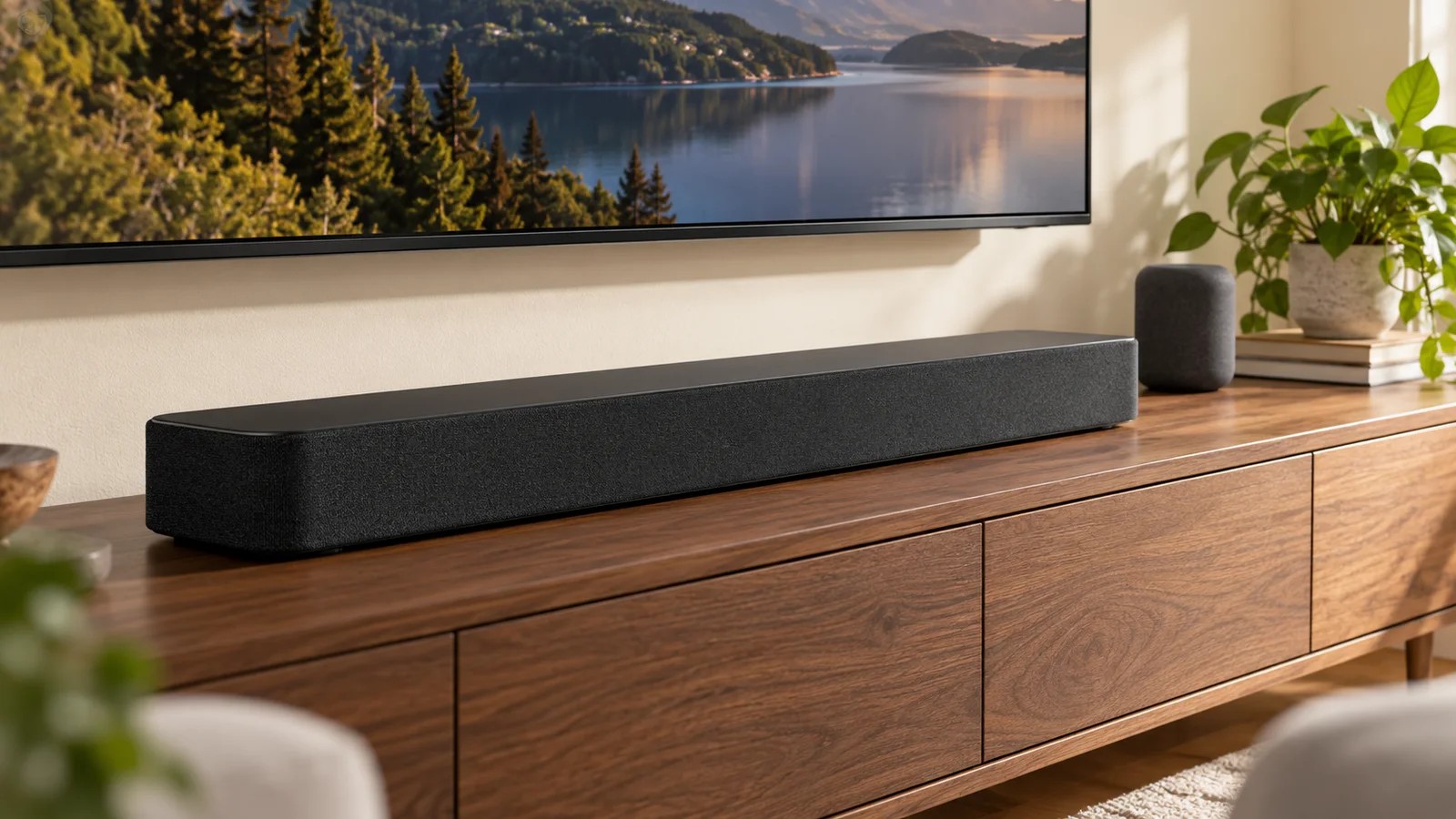
Sonos announced Beam Ultra on September 1, 2026, with general availability September 29. The compact soundbar includes upward-firing drivers, Dolby Atmos support, Speech Enhancement and Night Sound. It is a logical candidate when television audio is the problem and a large soundbar would dominate the console.
Measure first: Sonos lists a width of 29.53 inches, height of 2.56 inches and depth of 4.13 inches. Check the TV’s infrared receiver, screen edge and available surface, then leave the installation appropriate to the bar’s drivers. Sonos offers a simulated-overhead setting for an obstructed top; that does not establish that every shelf placement produces equivalent sound.
The TV connection is HDMI ARC or eARC, while several advanced formats require eARC. Sonos specifies compatible content and an eARC connection for its advertised Atmos experience. Setup also needs power, internet and the current Sonos app. Extra surrounds and a subwoofer are additional purchases. A rear switch disconnects microphone power if voice features are unwanted.
Editorial verdict: a focused shortlist option for a compact TV system, especially where compatible Sonos equipment already exists. Check your exact TV’s audio-output support before buying. We have not measured dialogue intelligibility or room coverage, so those remain questions for an audition or a returnable home evaluation.
Philips Hue Play screen sync: the important difference is the content source
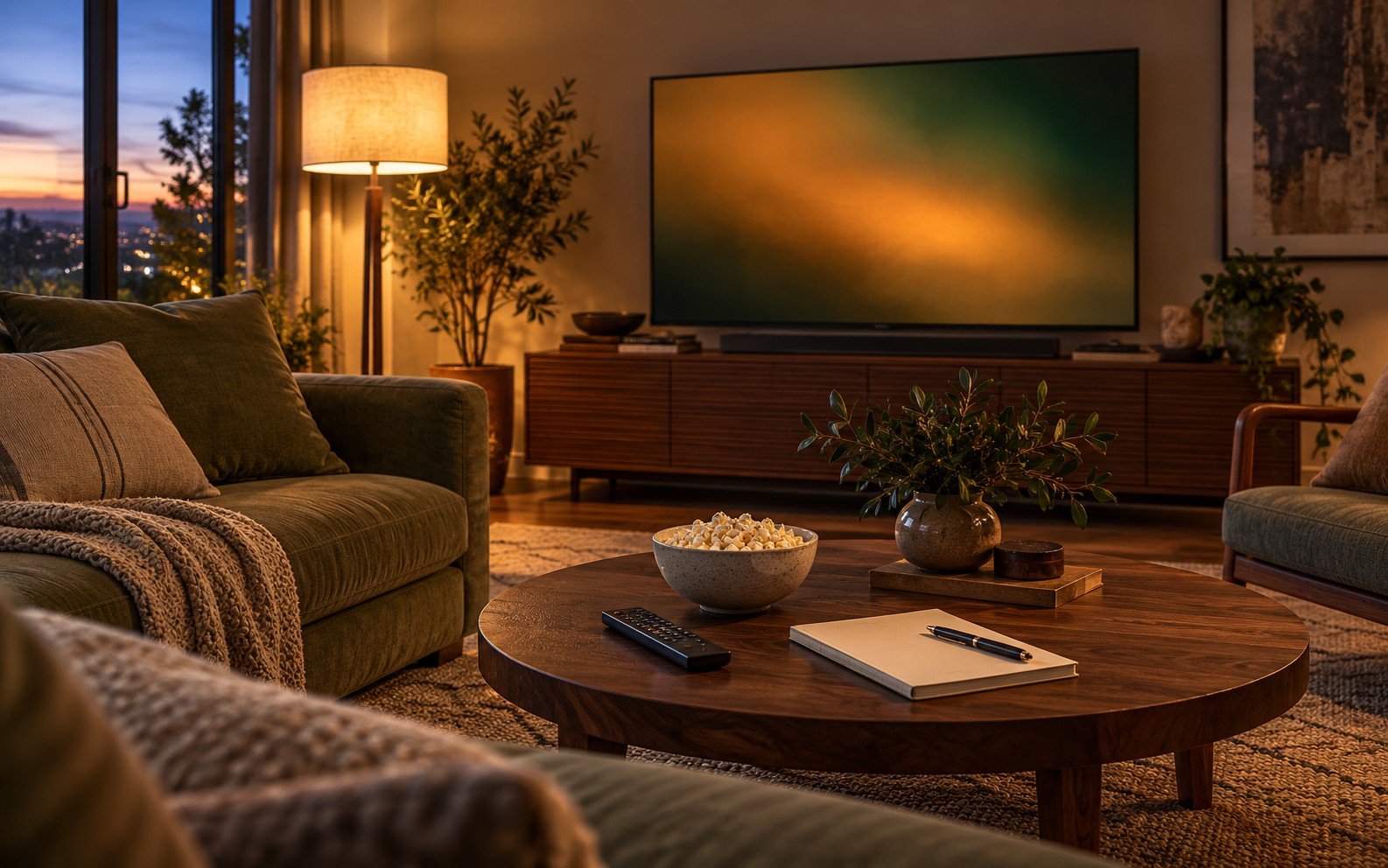
Announced and available in the US from September 3, 2026, Hue Play screen sync uses a fisheye lens to read the television display and coordinate compatible Hue lighting. That makes it relevant to viewers using built-in streaming apps or broadcast TV: their picture does not have to pass through an external HDMI sync box.
The accessory is not the complete lighting installation. Hue’s setup guide calls for the device, a compatible Hue TV strip light and the Hue app. Signify says one Play gradient TV strip can synchronize over Bluetooth without a bridge; expanding to a surround-lighting arrangement requires a Hue Bridge or Bridge Pro. Confirm the exact strip pairing before assembling a basket of products.
Choose by screen size and physical fit, then inspect where the lens and cable will sit. Hue’s guide describes screen-sync use on televisions up to 85 inches. Review the privacy information for a lens-based accessory, rather than assuming how its image processing works. Philips Smart Lighting products using WiZ are a different range; the Philips name alone does not establish Hue compatibility.
Editorial verdict: interesting for native-app viewers who actively want moving room lighting. Prioritize mounting fit, calibration instructions and return terms. We have not tested color accuracy or latency. If your goal is simply a calmer-looking room, first decide whether ordinary steady lighting would satisfy it.
Google Home Speaker: separate the speaker from the subscription
Google introduced its current Home Speaker on June 17, 2026, with availability June 25. This is a current buying option, not an October launch. Its case is straightforward: a voice-control point and music or podcast speaker for a home already organized around Google Home.
Setup uses the Google Home app, Wi-Fi and a Google account. Google also supports pairing up to two Home Speakers with a Google TV Streamer for a home-theater arrangement. Check that specific equipment path; the announcement does not make this a universal wireless soundbar for every television or external input.
The service boundary matters. Google distinguishes basic tasks, quick answers and smart-home control from paid Google Home Premium features such as more open-ended Gemini Live conversations. Camera-history search and summaries also depend on the relevant subscription and compatible camera setup. Read what remains available after a promotional trial, and add the continuing plan to your household budget if it is the reason you want the speaker.
A physical toggle mutes the microphone. Agree on its position and voice use in a shared room, particularly if some household members would prefer app or manual controls. Editorial verdict: consider it when Google Home is already useful to you. Replacing a functioning speaker deserves a specific feature-based reason; conversational promises alone do not tell us how reliably it will handle your household’s requests.
The five-minute check before ordering
Write down the job, exact product, required companion equipment, ongoing services and intended position. Photograph your existing ports and measure the available space. Check current retailer availability and return conditions at purchase time; announcement dates and an attractive product photograph cannot answer those questions.
Keep the first upgrade manageable. Connect it, check the function you bought it for and make sure everyone can use it before expanding the system. A useful gadget should remove an irritation you can name.
Sources & further reading
Source material checked October 18, 2026. Availability, formats, services and product requirements can change.
Apple: HomeView announcement, October 13, 2026; availability and requirements ↗Apple HomeView: product and household compatibility information ↗Sonos: Beam Ultra announcement and September 29, 2026 general availability ↗Sonos Beam Ultra: US specifications and setup requirements ↗Signify: Philips Hue September 3, 2026 entertainment announcements and bridge requirements ↗Philips Hue Play screen sync: US model 046677612436 ↗Philips Hue: comparison of screen-sync, HDMI and native TV-app setups ↗Signify: Philips Smart Lighting is a separate WiZ-based ecosystem ↗Google: Home Speaker introduction, June 17, 2026, and June 25 availability ↗Google Home Speaker: US setup, microphone controls and subscription boundaries ↗Research-based guidance. How we publish and review our work